Enhancing Search for seamless discovery for 350M+ global users
Overview
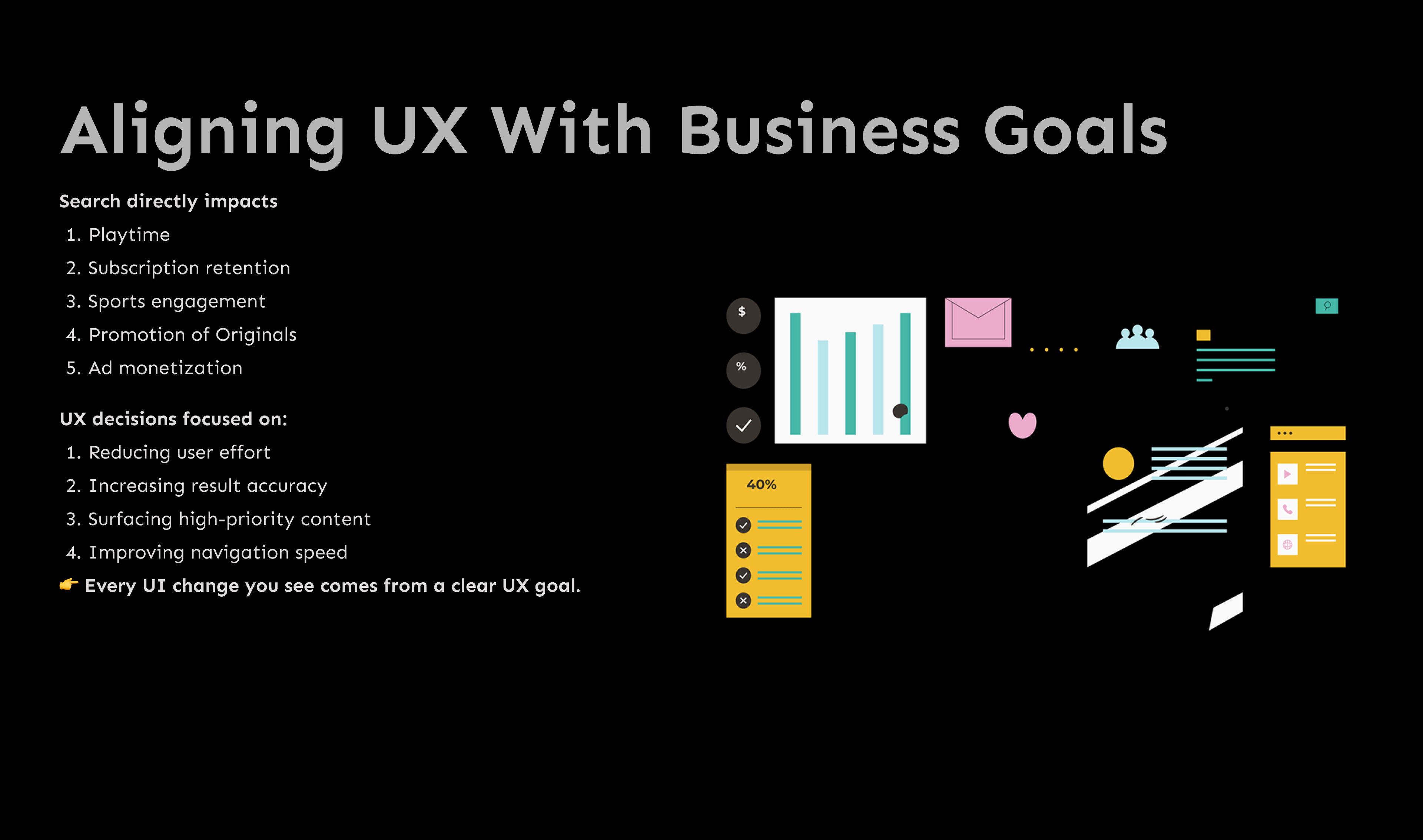
SonyLIV serves 350M+ users, with search acting as the primary gateway to content discovery across Originals, Live Sports, Movies, and TV Shows. However, the legacy search experience caused friction globally, users struggled to surface relevant results, refine queries, and navigate massive content libraries.
My goal was to redesign the search experience to be faster, clearer, and more intelligent, rooted in UX problems and shaped into UI solutions that scale across Android, iOS, tablets, and low-end devices.
What I Owned
- Search UX principles
- Competitive research
- IA & content categorization
- User insight mapping
- Interaction & UI design
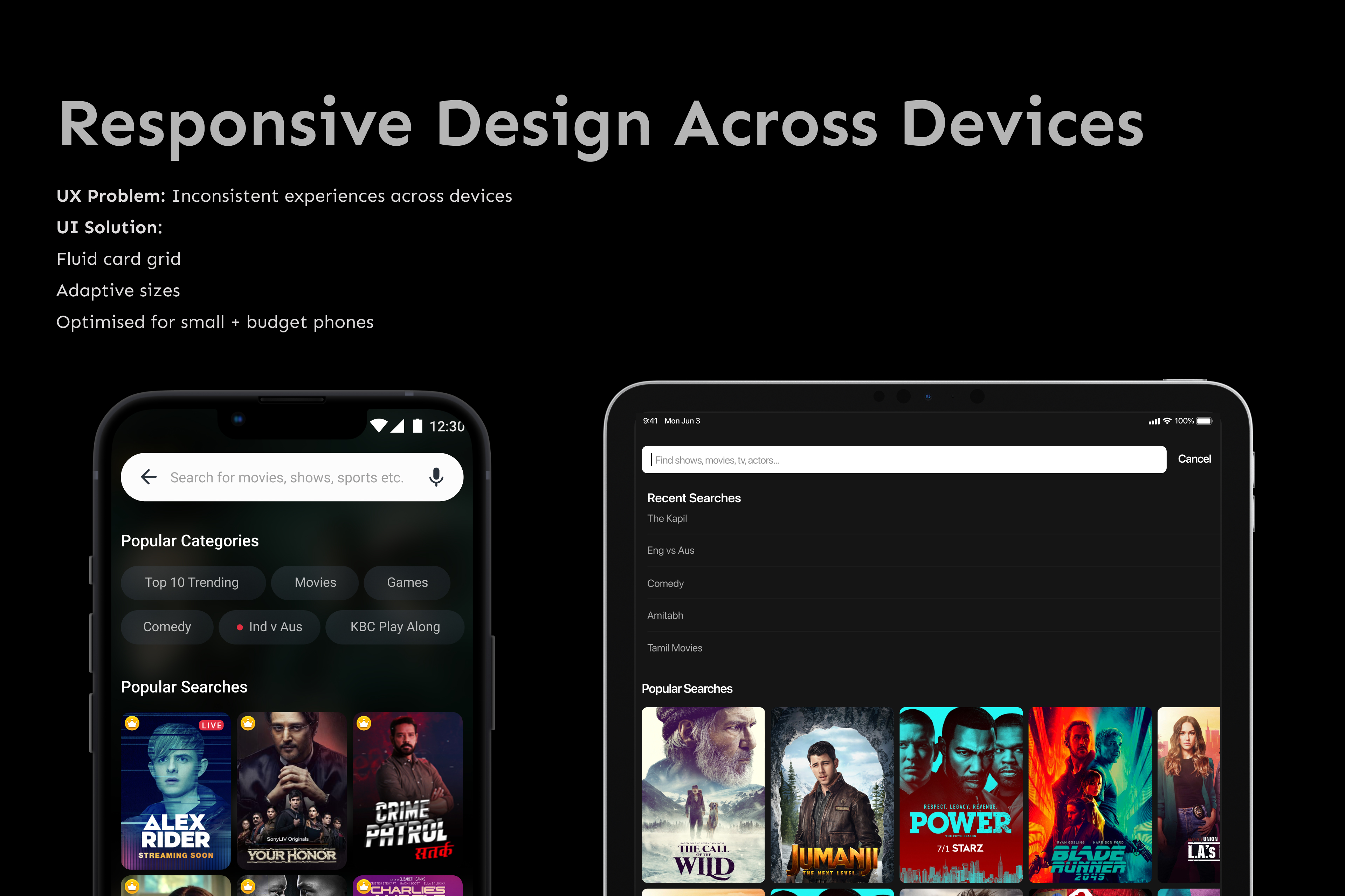
- Responsive & device adaptation
- Usability testing
- Handoff specifications
Brand
SonyLIV
Category
OTT, Entertainment, B2C
Contribution
Lead Product Designer — End-to-end Search UX & UI
Team
1 × product designer, 1 × product manager, 1 × product owner, 3 × engineers
Impact
Process
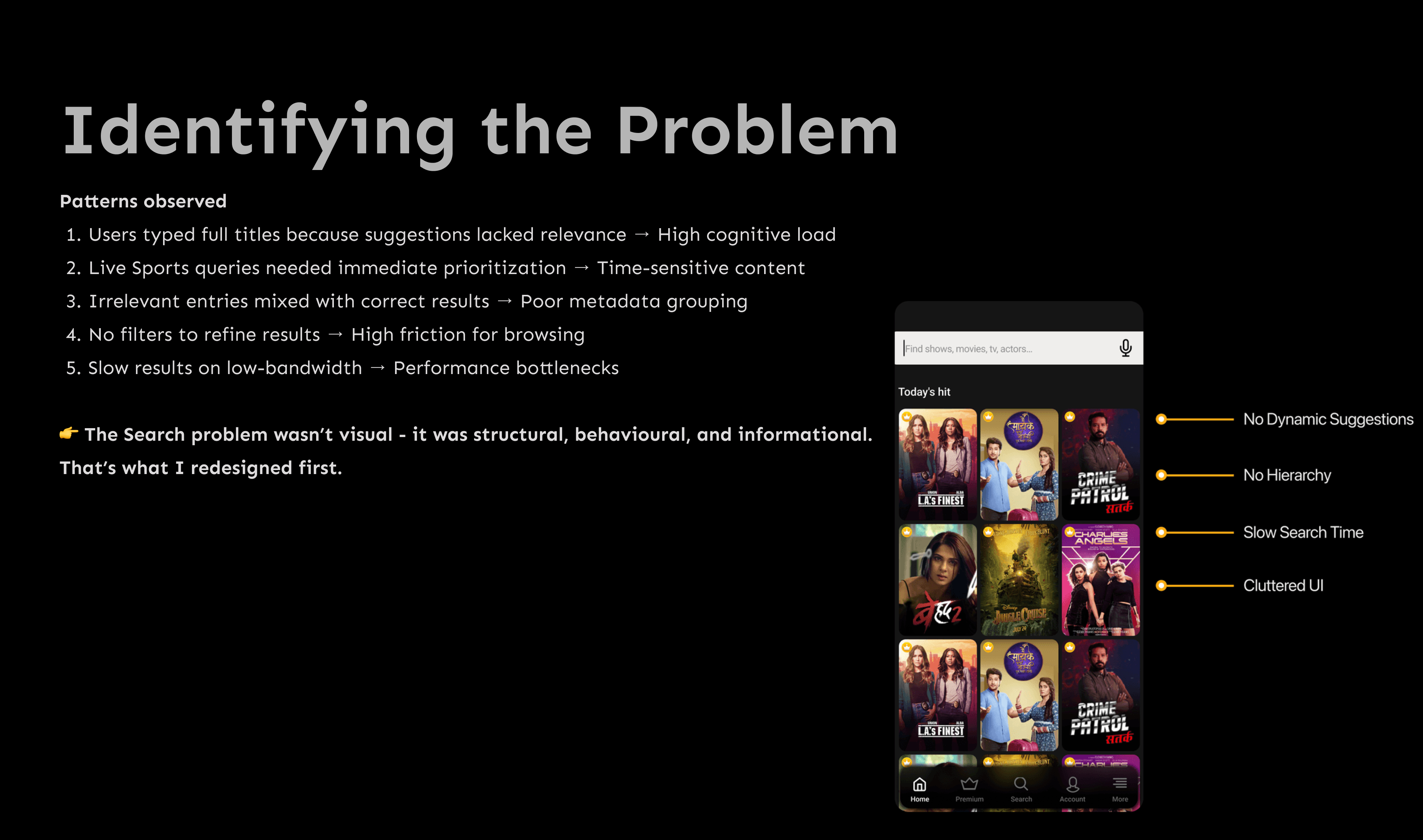
My process began with understanding why search was breaking before designing how it should work:
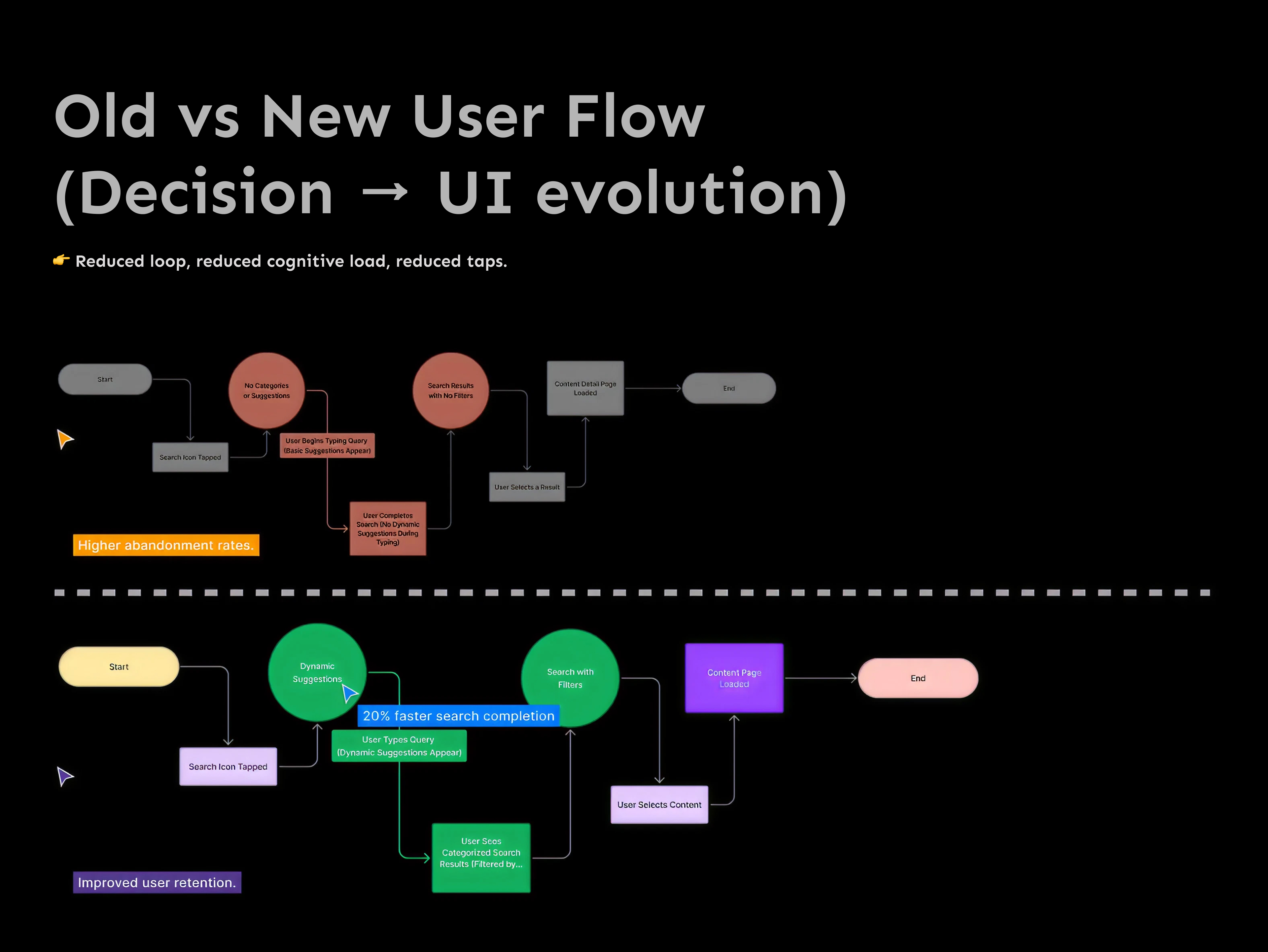
- Identified drop-offs and common failure patterns.
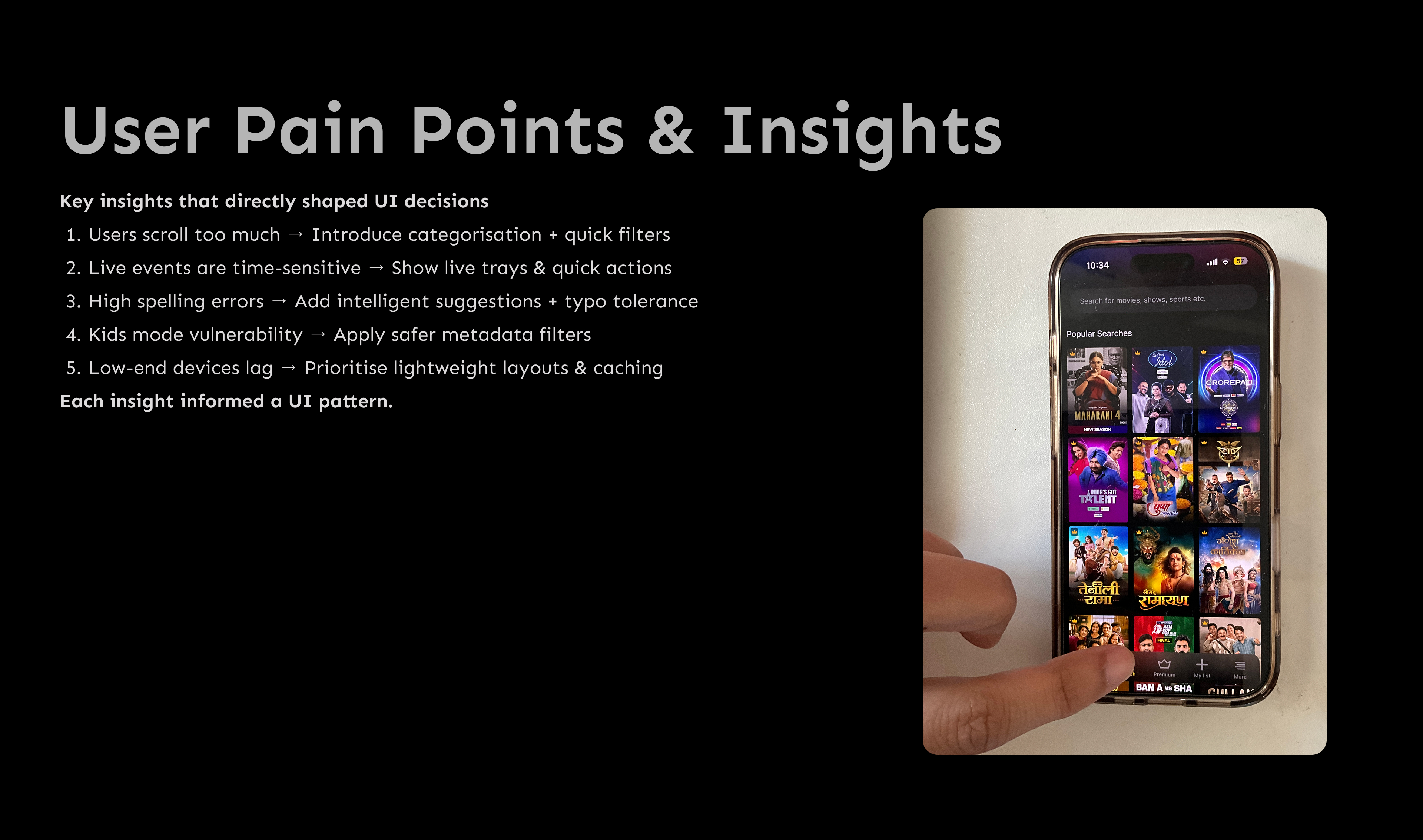
- Extracted consistent complaints from reviews and user interviews.
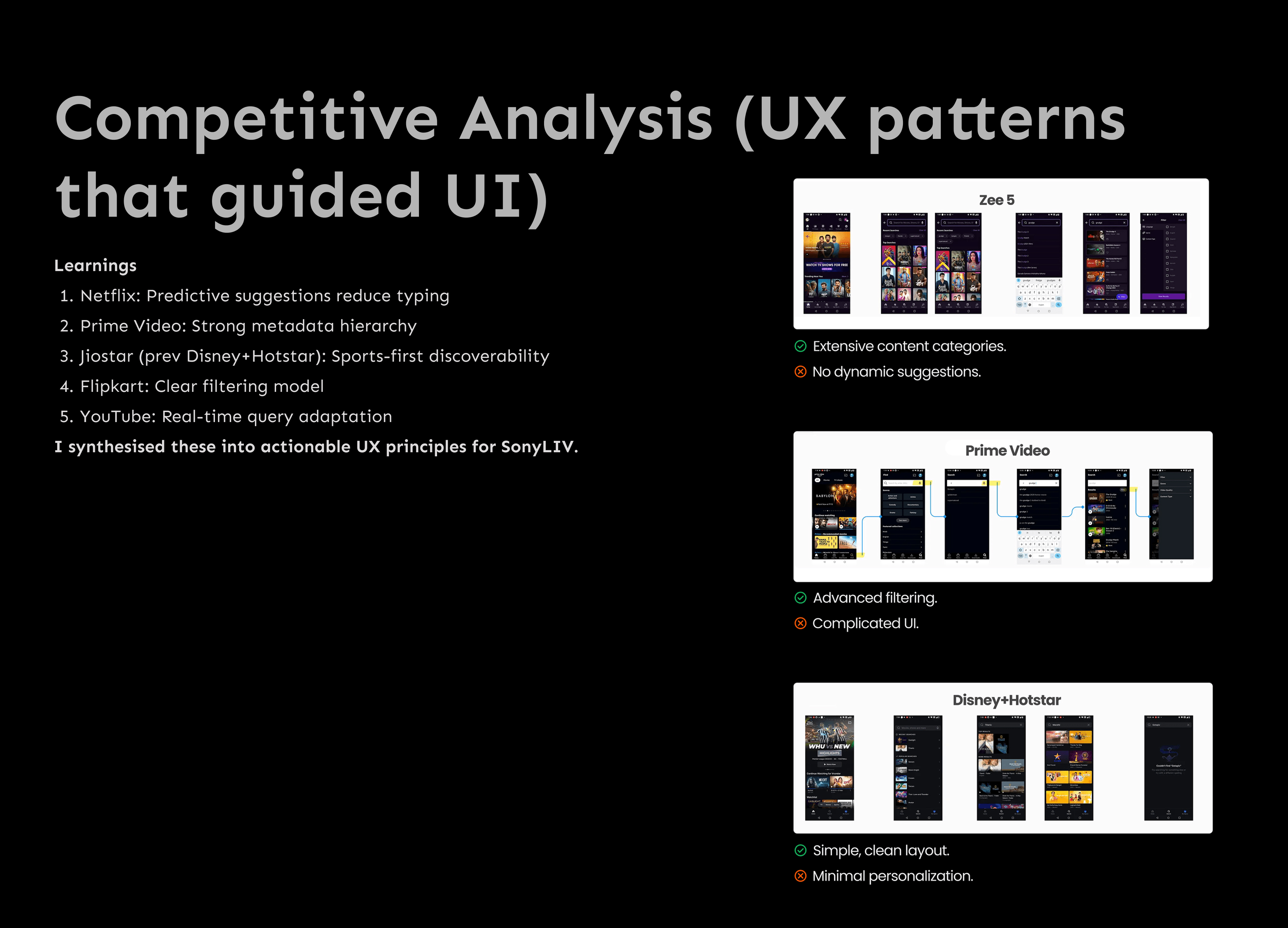
- Studied global patterns from Netflix, Amazon, YouTube, Spotify, Flipkart.
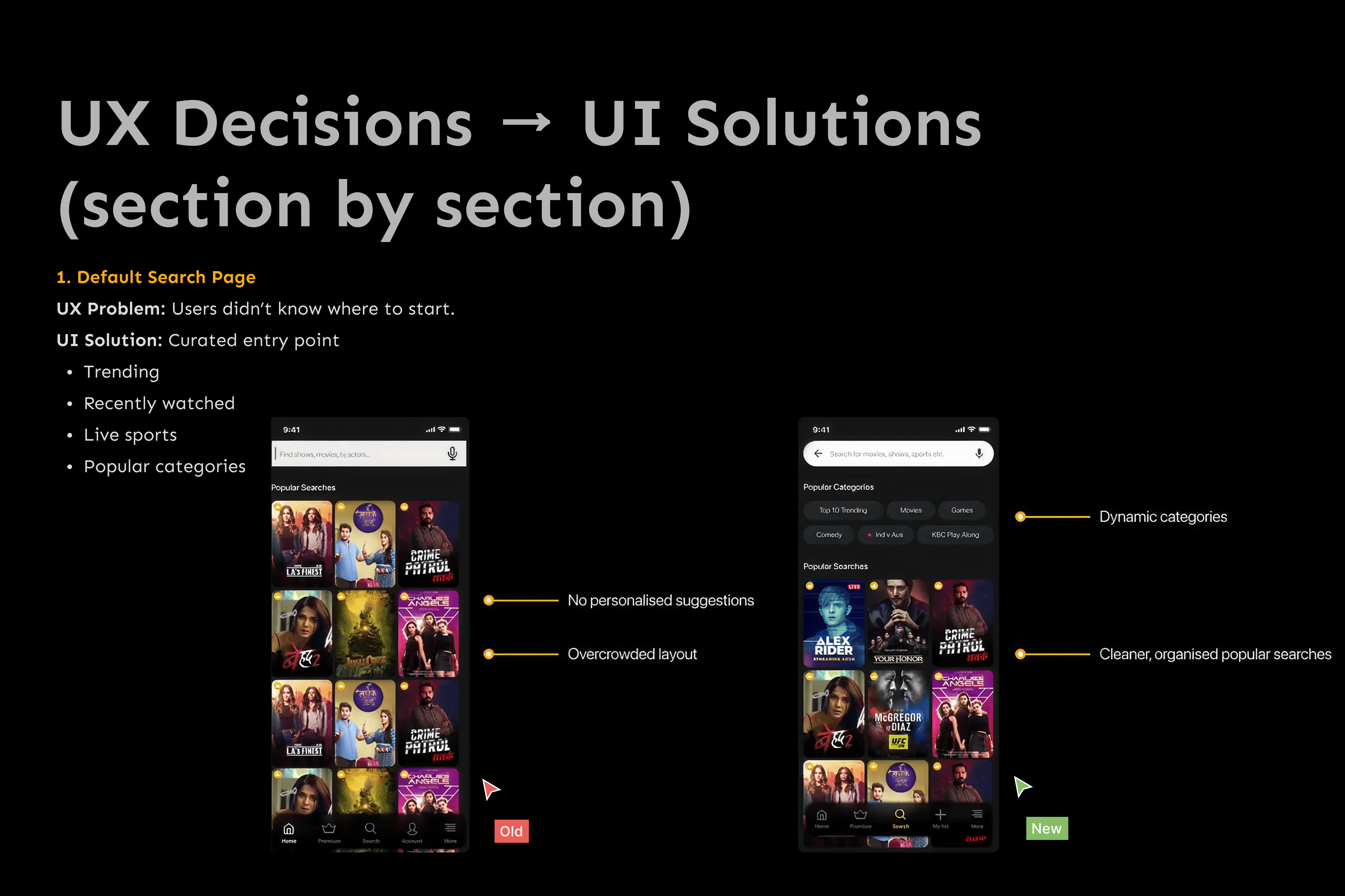
- Clustered into accuracy, discoverability, relevance, and refinement issues.
- These guided every UI decision.
- Built prototypes, validated in quick feedback loops.
Outcome
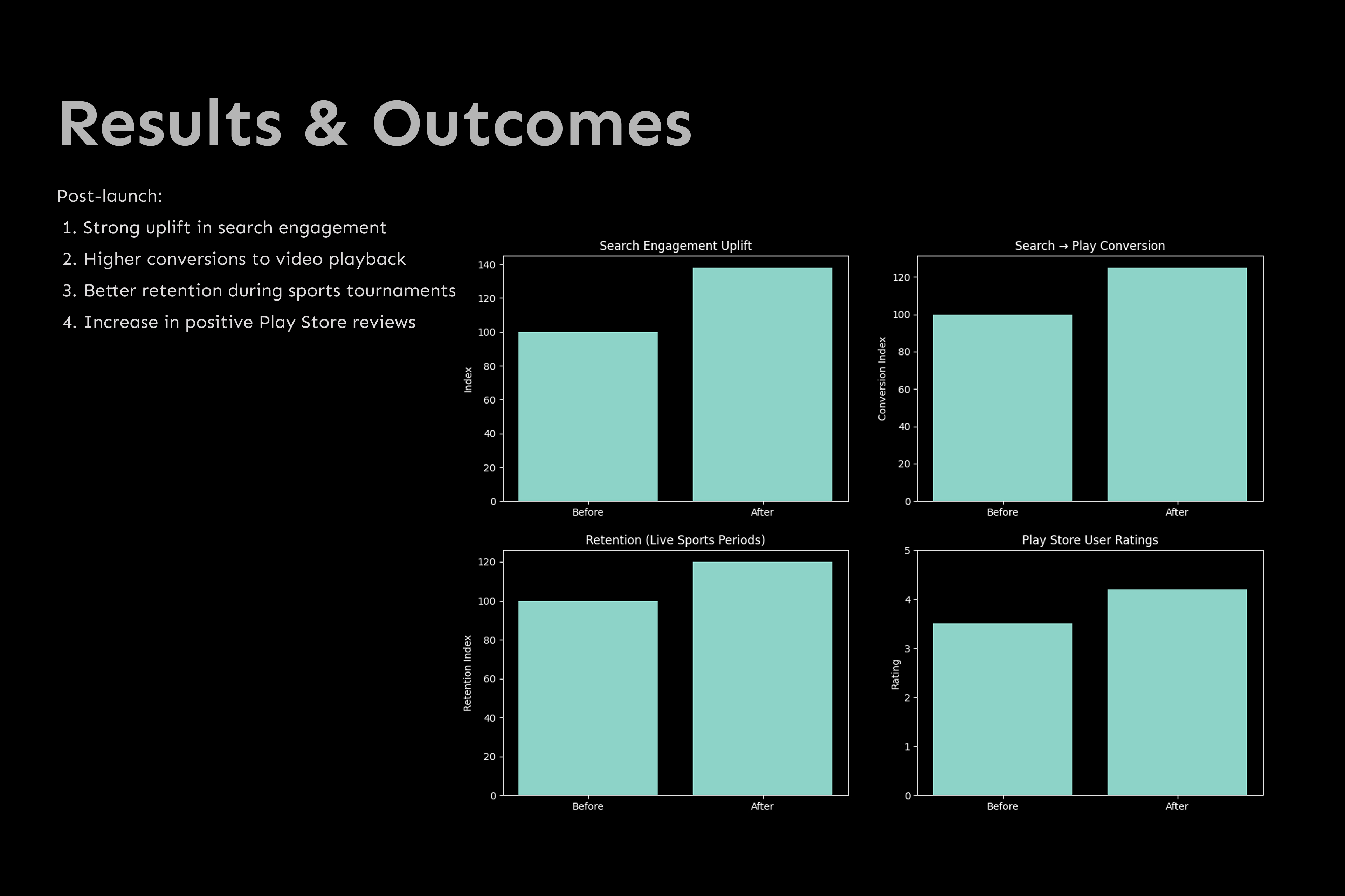
The redesigned Search experience delivered measurable improvements across both user behaviour and business KPIs:
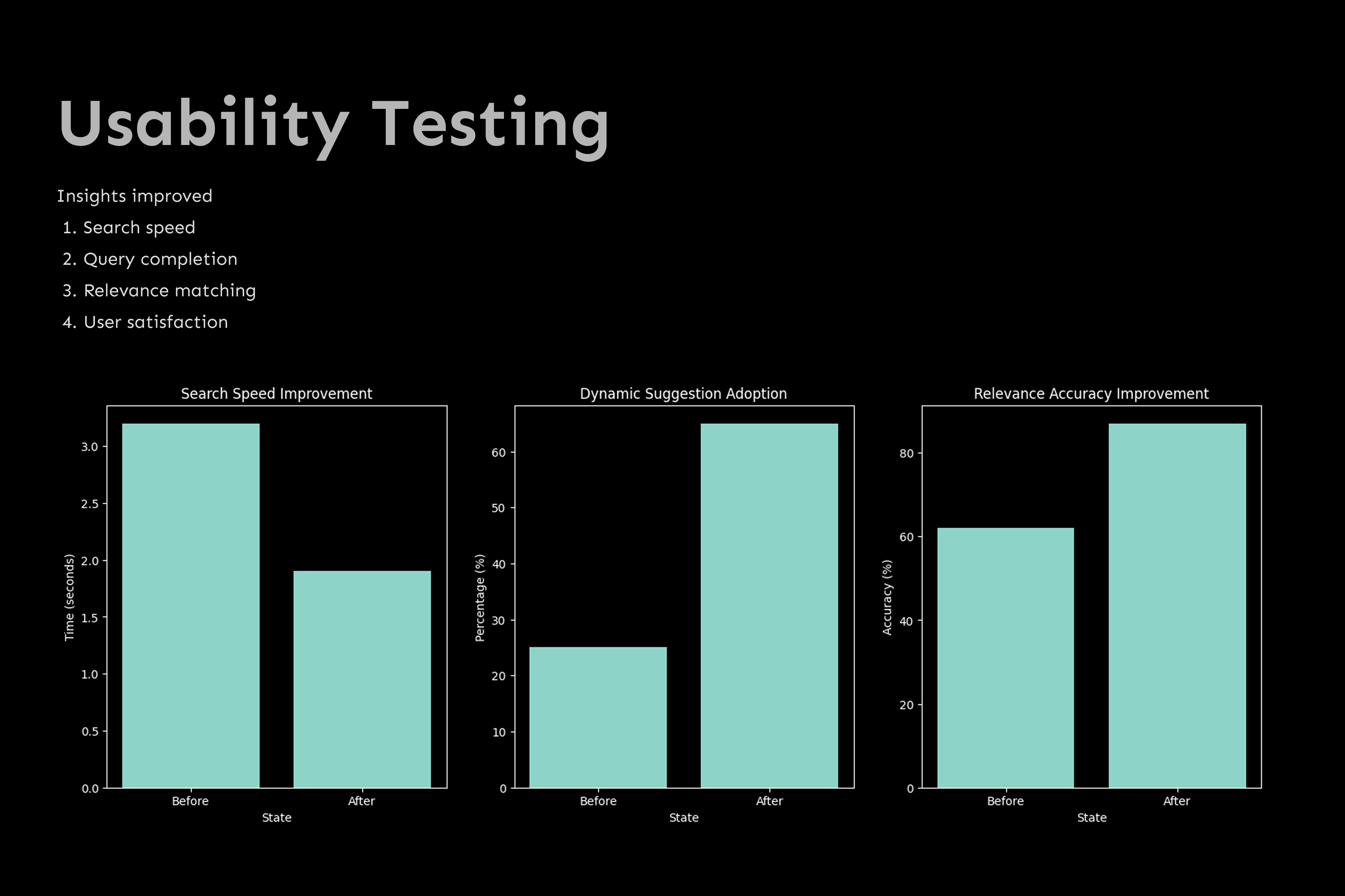
1. Improved Search Efficiency
- Users found relevant content faster, with a noticeable reduction in “scroll–back–refine” loops.
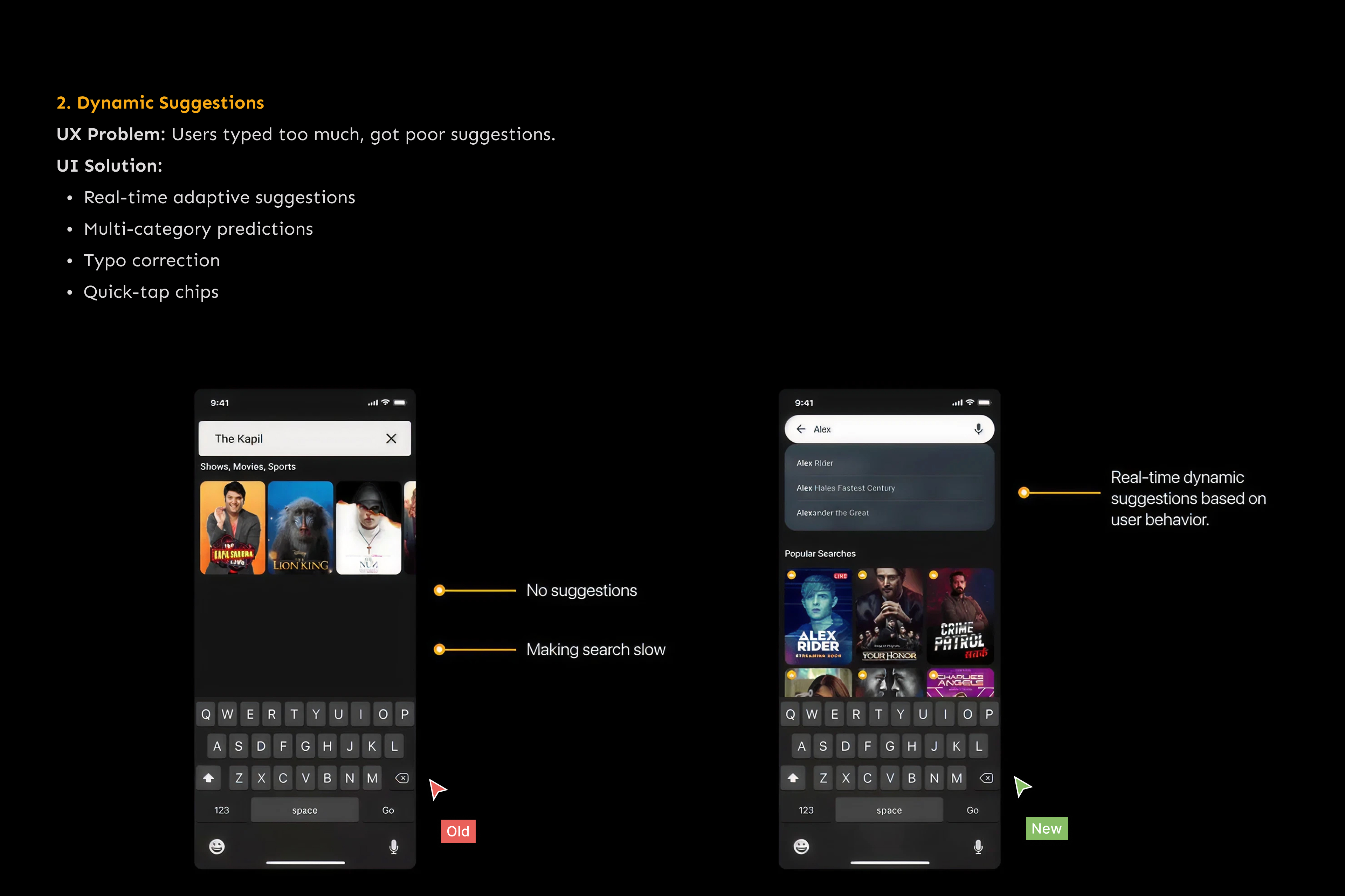
- The introduction of dynamic suggestions decreased typing effort and increased first-try accuracy.
2. Higher Search-to-Play Conversions
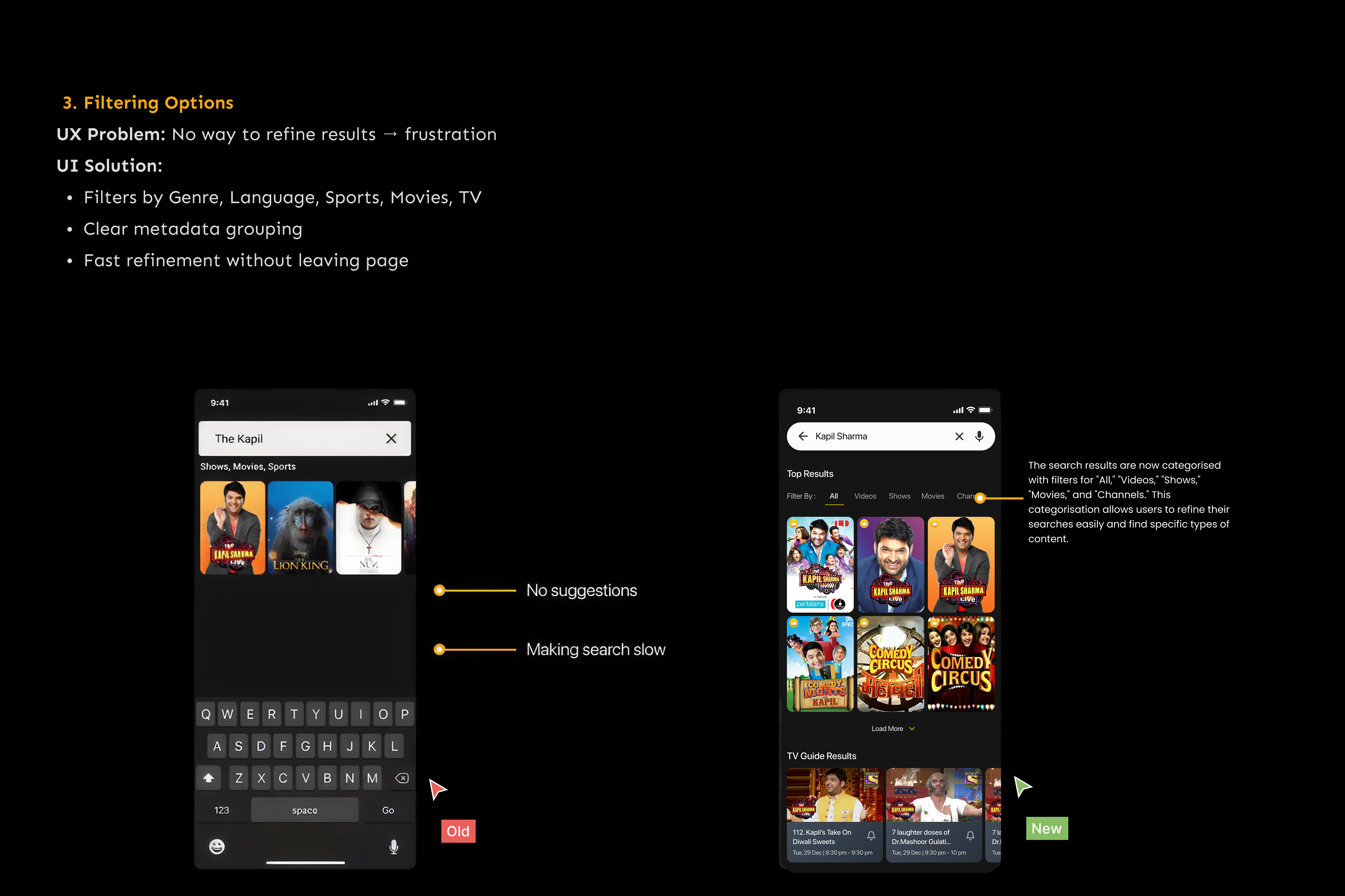
- Clearer metadata, improved ranking, and structured result layouts led to more plays originating directly from search.
- Live sports content saw significantly higher engagement due to real-time visibility in suggestions and default cards.
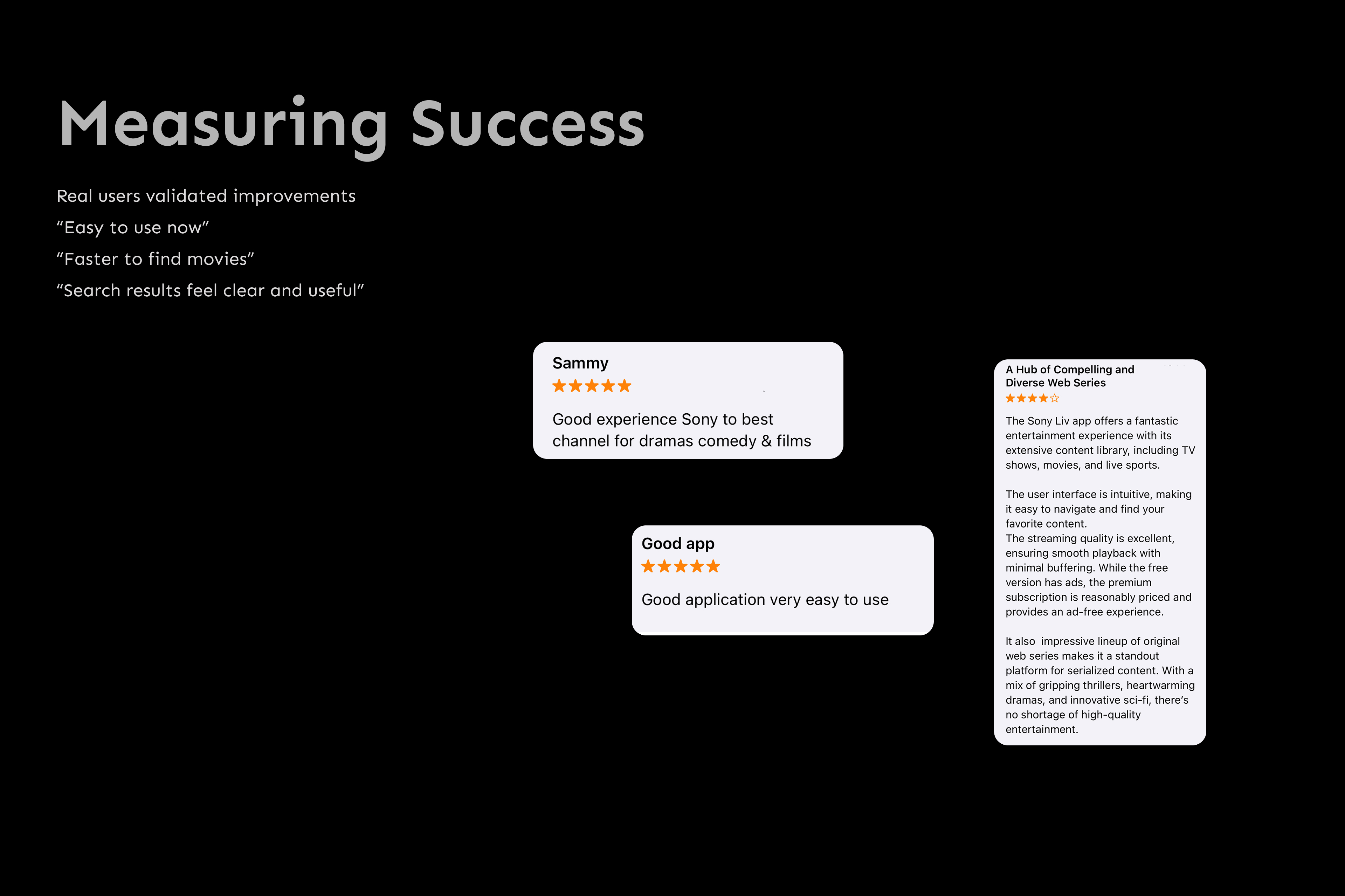
3. Increased User Satisfaction
- Positive Play Store reviews highlighted the improved clarity, ease of use, and faster performance.
- Better filtering and categorisation reduced confusion and helped users navigate large content libraries confidently.
4. Stronger Retention During Peak Events
- During sports seasons, the redesigned search handled traffic spikes smoothly, reducing drop-offs caused by slow results.
- Users stayed longer and explored more, increasing overall watch time.
5. Optimised for All Devices
- The new responsive layouts delivered a consistent experience across budget smartphones, tablets, and high-end devices.
- Performance improvements significantly reduced lag on low-bandwidth connections.


