Role: Lead Product Designer (End-to-end)
Platform: Admin Portal · Web
Users: Councils · Destinations · Estates
2 months
The primary buyer was a council or destination management organisation, risk-aware, non-technical leadership who needed governance and delivery confidence above all else.
"The tools existed, CMS, dashboards, IoT feeds, but nothing was designed to work together for this buyer type. Operators were patching five tools that never talked to each other."
Fragmented content ops
Venue information maintained across disconnected tools with no central governance layer or consistent publishing model.
Insight nobody could use
BI tools built for analysts. Non-technical operators and executives had no fast path to answers without raising a request.
Invisible infrastructure
Sensors and cameras deployed across sites with no unified visibility layer, no spatial context, and no actionable output.
Disconnected experience
Public-facing apps had no live connection to operational data. Content and reality were always out of sync.
Figma
Single source of truth for all screens, components, and flows across six modules and three buyer contexts.
Figma Make
Interactive prototypes that moved stakeholder conversations from "what will it look like" to "this is how it works."
Claude Code
Used to surface structural inconsistencies in the IA and generate component documentation drafts accelerating audit and handoff.
Design System
Built in parallel with the product colour tokens, component variants, interaction patterns, locked helper text, and handoff docs.
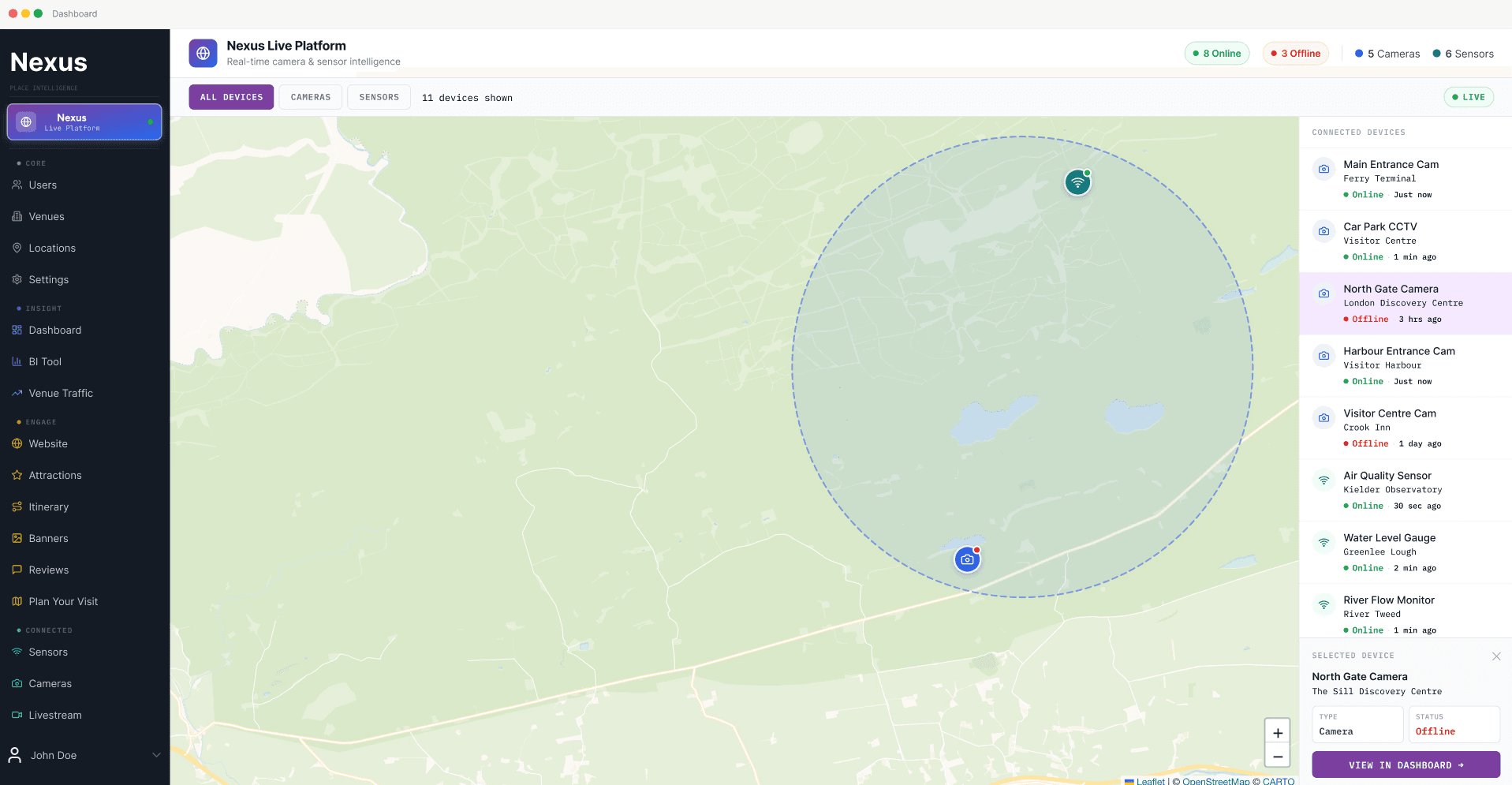
Reduces cognitive overload for operators managing live incidents the right information at the right time, not everything at once.
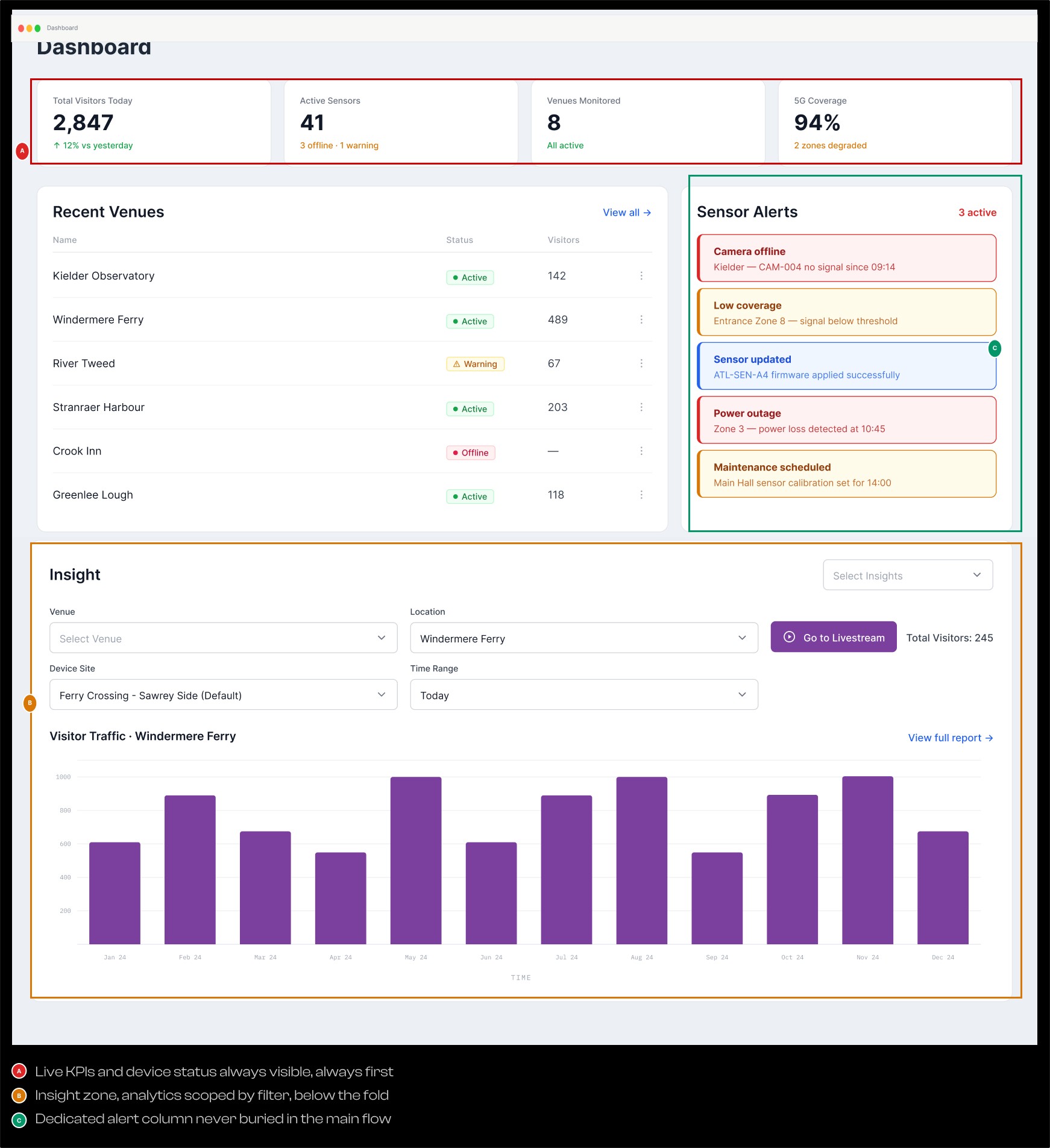
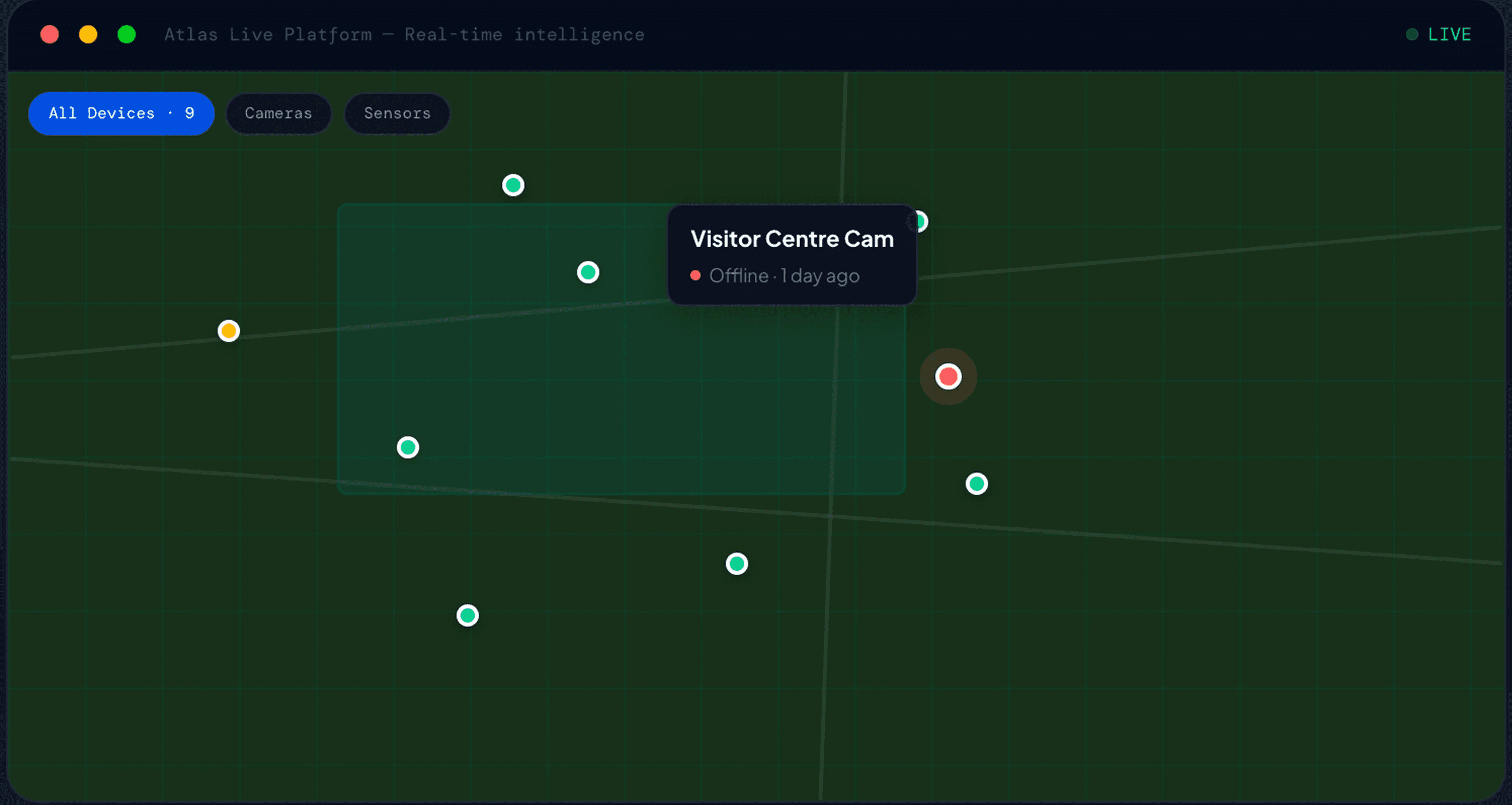
Operators can locate an offline device spatially in seconds. The map becomes actionable intelligence, not decorative context.
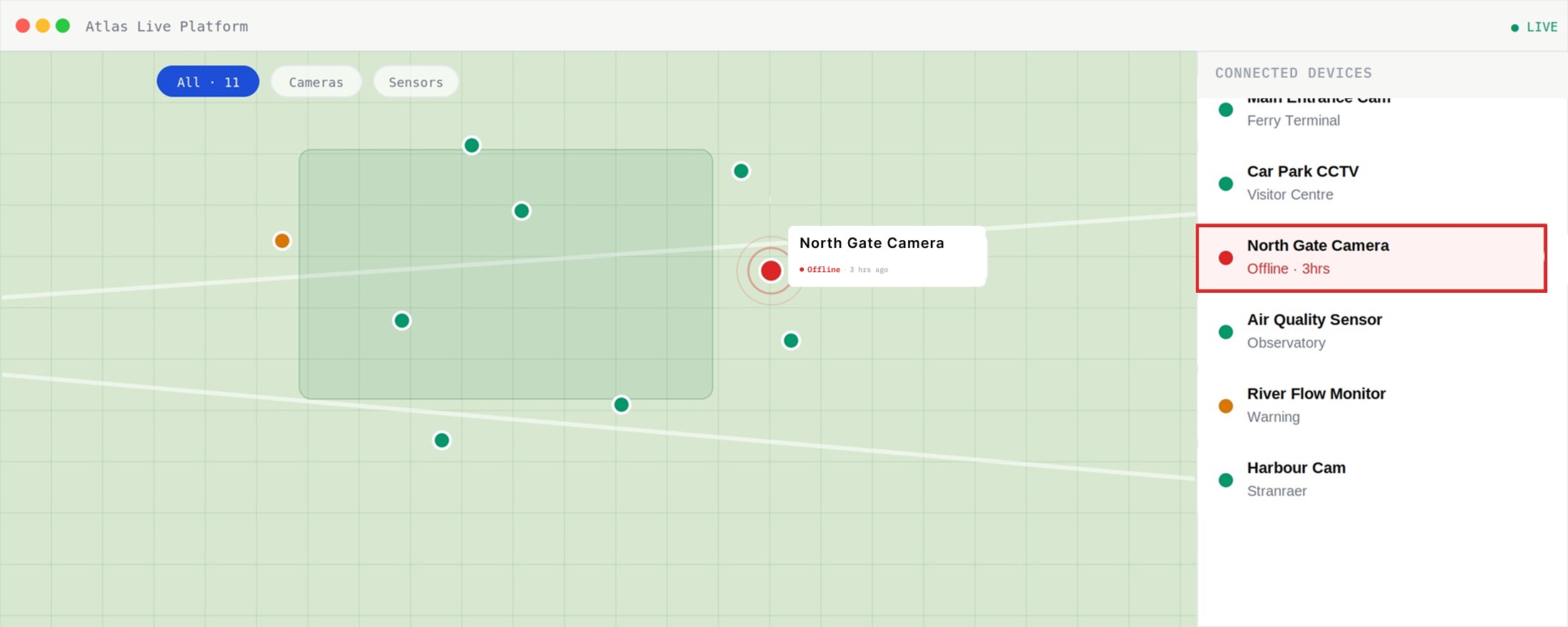
Offline, selected state with pulse ring
Online, transmitting normally
Essential for councils and public sector buyers who require audit trails — accidental deletion can never be an option in a governed platform.
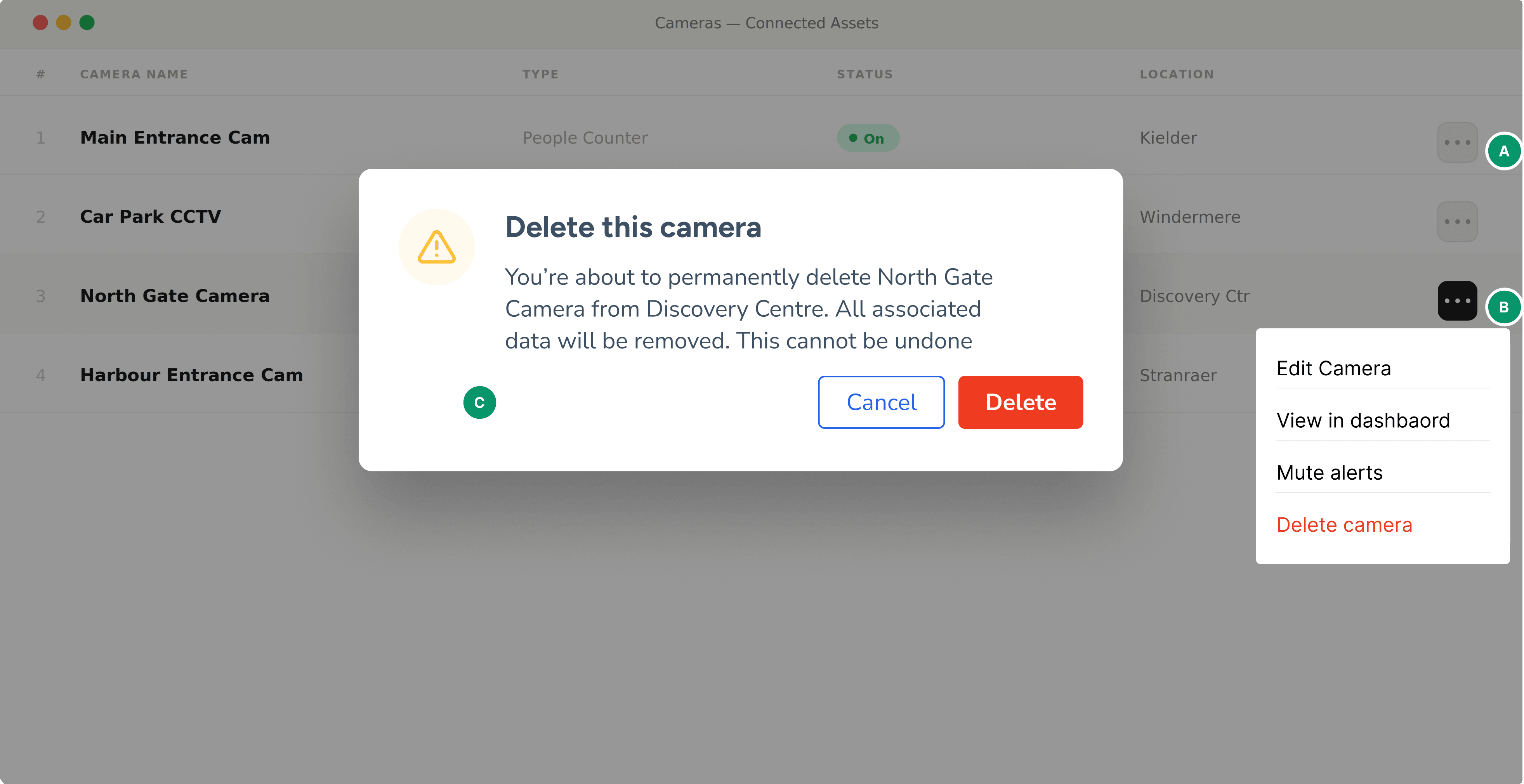
A
Kebab trigger: destructive action de-emphasised behind
B
Dropdown: Edit fast, Delete grouped with a second step required
C
Data operators can trust is the foundation of any intelligence platform. Broken filter logic destroys confidence in the entire product.
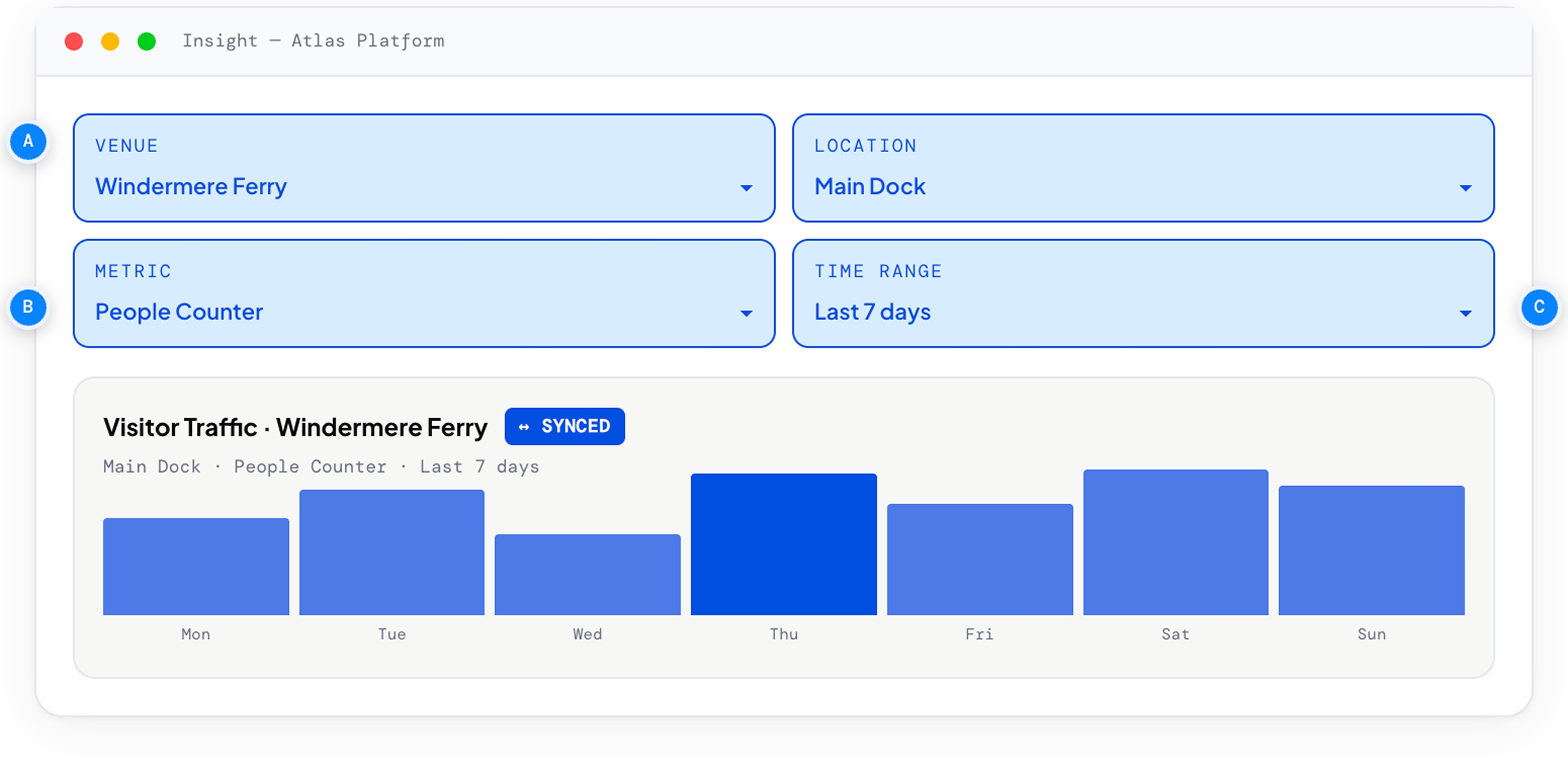
A
All four filters highlighted when active, visually grouped as one control
B
Chart title dynamically reflects filter state, never generic or stale
C
Governance and access control are primary selling points for this buyer type. Role clarity is a trust signal, not an aesthetic choice.
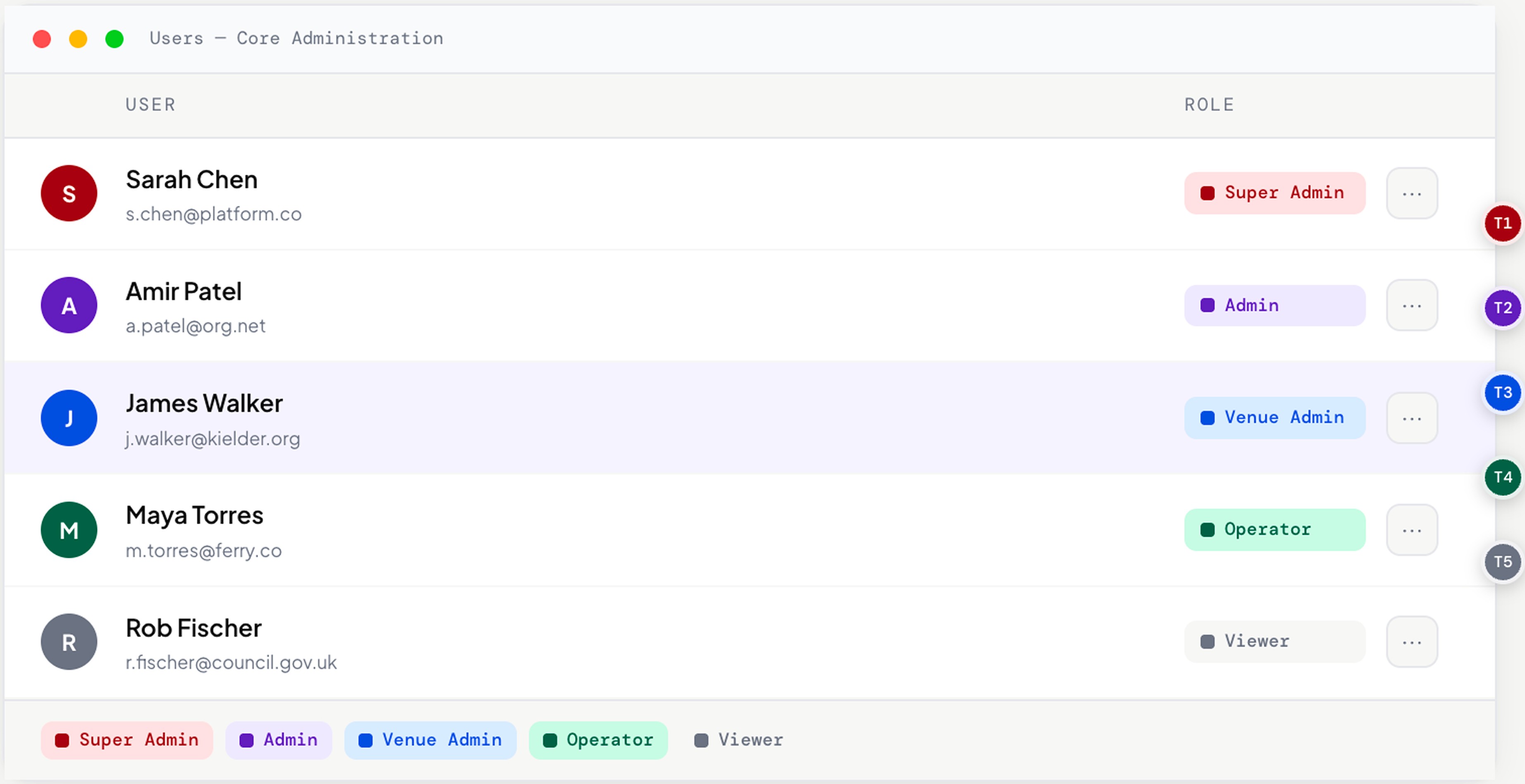
T1
Super Admin: red, highest permission, immediately distinct
T2
Admin: violet, platform-wide access
T3
T4
T5
Alert fires
Operator notified of offline device
Locate on map
Pin highlighted and synced with list
Inspect
Right panel shows type, venue, status
Go deeper
One click to full dashboard report
Resolve
Issue logged, audit trail maintained
Design note 01
Map ↔ List sync
Selecting a device in the list flies the map to its pin. Selecting a pin populates the detail panel. Both always reflect the same truth.
Design note 02
Consistent state system
Green = online, Red = offline, Amber = warning — across the map pin, list row, and detail panel. Never contradictory.
Design note 03
Single escalation path
The panel shows enough to act immediately. "View in Dashboard" is the only escalation route, no cognitive dead ends.
The platform addressed a gap no existing product had cleanly filled — a governed intelligence layer for the organisations running connected destinations, venues, and public places. The design system made handoff clean. The AI-assisted workflow cut audit and documentation time. The product is live.